Italian cast on (tubular cast on) for 1×1 rib
The Italian cast on (tubular cast on) gives 1×1 rib a rounded, stretchy edge with no visible cast-on row. Step by step, with the foundation rows.
 By Julia WallinCo-founder and editor
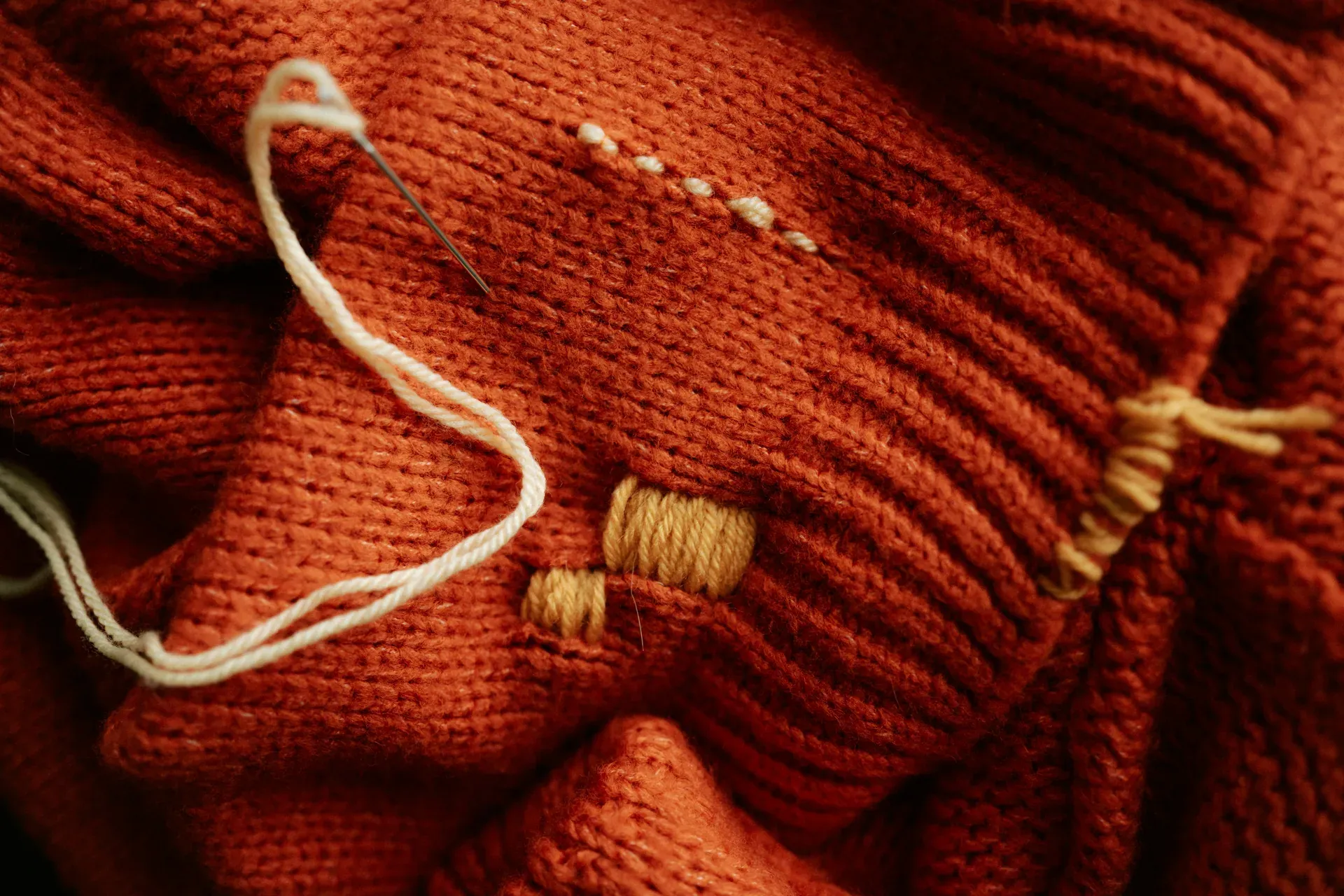
The Italian cast on gives 1×1 rib a rounded, stretchy edge with no visible cast-on row. Together with the foundation rows that follow it, it is often called the tubular cast on. The matching bind off is the tubular bind off.
Before you start
Use a needle 1 to 2 sizes smaller than your rib needle. Otherwise the edge gets too wide.
Leave a tail about 4 times as long as the edge is wide.
Hold the yarn as for the long-tail cast on: the tail over your thumb (the strand nearest you) and the working yarn over your index finger (the strand furthest from you).
Make the first stitch as a twisted loop on the needle, with the thumb strand crossing in front.
How to work it
You alternate between a purl stitch and a knit stitch.
Purl stitch: take the needle under the far strand, pick up the near strand, and bring the needle back out under the far strand.
Knit stitch: take the needle under the near strand, pick up the far strand, and bring the needle back out under the near strand.
Repeat steps 1 and 2 until you have the number of stitches you need. End so the last stitch fits the first stitch of your rib.
Twist the tail and the working yarn around each other under the last stitch, so the edge does not come undone. Then turn the work.
If you lose track: the near strand (thumb) makes purl stitches and the far strand (index finger) makes knit stitches. Purl stitches have a small bar at the base.
The foundation rows
Work 2 rows, or up to 4 for a rounder edge.
Flat: knit the knit stitches and slip the purl stitches with the yarn in front. On the first row, knit the knit stitches through the back loop, because the cast on leaves them sitting backwards on the needle.
In the round: on round 1, knit the knit stitches through the back loop and slip the purl stitches with the yarn in front. On round 2, slip the knit stitches with the yarn in back and purl the purl stitches.
Then change to your rib needle and work the rib as usual.
When to use it
Use it on 1×1 rib that shows, such as neckbands, hems, cuffs, socks and hats. It takes longer than other cast ons. For edges that do not show, and for 2×2 rib, the German twisted cast on is quicker and also stretchy.
Common mistakes
Two stitches of the same kind in a row. The rib will not line up.
Slipping the purl stitches with the yarn in back on the foundation rows. The yarn must be in front, or the edge will not be rounded.
Frequently asked questions
What is the difference between the Italian and tubular cast on?
They are the same technique. Italian cast on is the cast on itself, and tubular cast on usually means the cast on plus the foundation rows.
Why does my tubular cast on flare?
The needle was too big. Use a needle 1 to 2 sizes smaller than your rib needle for the cast on and the foundation rows.
Can I use it for 2×2 rib?
Not directly, because it makes stitches for 1×1 rib. You can move the stitches into 2×2 order, but the German twisted cast on is easier.
Is it worth the effort?
Yes, on rib that shows. No other cast on gives the same rounded, stretchy edge. On edges that do not show, use a simpler cast on.
Co-founder and editor at Knyt. Knits every guide before it is published.
More about Julia