Rib stitch: how to knit 1×1 and 2×2 rib
Rib stitch alternates columns of knit and purl stitches, so the fabric stretches. How to knit 1×1 and 2×2 rib flat and in the round, with stitch counts.
 By Julia WallinCo-founder and editor
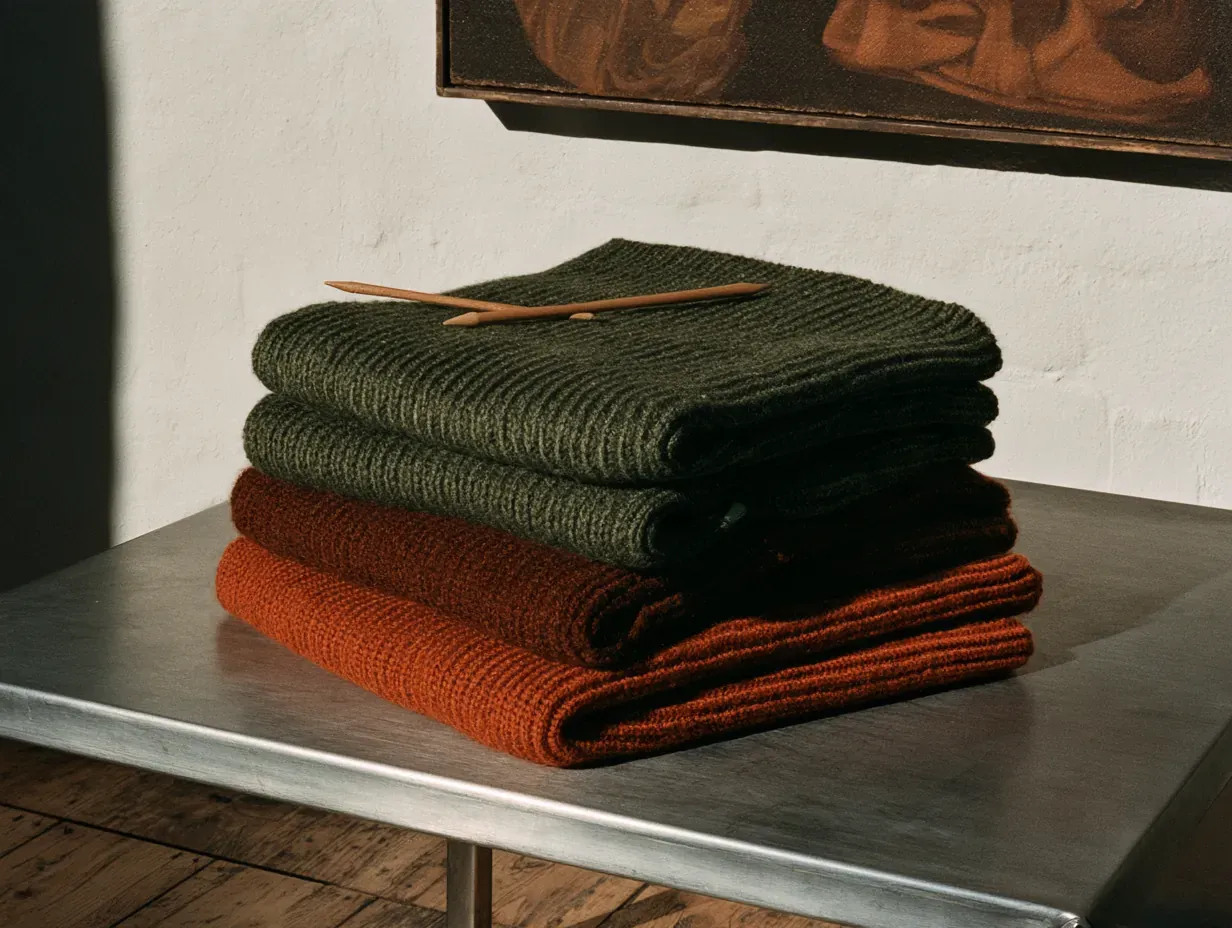
Rib stitch is knitting where columns of knit stitches alternate with columns of purl stitches. The two basic versions are 1×1 rib (knit 1, purl 1) and 2×2 rib (knit 2, purl 2). The purl columns sit lower than the knit columns, so the fabric pulls in. It stretches sideways and springs back, which is why rib is used for cuffs, hems, neckbands and hat brims. You only need the knit and purl stitches.
Stitch counts
| In the round | Flat | |
|---|---|---|
| 1×1 rib | multiple of 2 | multiple of 2, plus 1 |
| 2×2 rib | multiple of 4 | multiple of 4, plus 2 |
When you knit flat, the extra stitches let right-side rows start and end with knit stitches, so both edges match. Some patterns also add an edge stitch at each side for seaming.
How to knit 1×1 rib
Knit 1 stitch with the yarn at the back of the work.
Bring the yarn forward between the needle tips.
Purl 1 stitch.
Take the yarn back between the needle tips.
Repeat steps 1 to 4 to the end of the row or round. When you knit flat, end with knit 1.
For 2×2 rib, knit 2 and purl 2 instead of 1 and 1. You only move the yarn when you change from knit to purl or from purl to knit.
Always move the yarn between the needle tips, not over the right needle. If the yarn goes over the needle, it makes an extra loop. On the next row you get a hole and one stitch too many.
The next rows
In the round, work every round the same way.
When you knit flat, the stitches face the other way after you turn the work. Knit the stitches that look like a V, and purl the stitches that have a small bump below the needle. This is called knitting the knits and purling the purls. With the stitch counts above, right-side rows start with knit 1 and wrong-side rows start with purl 1. In 2×2 rib, they start with knit 2 and purl 2.
In patterns
English patterns write k1, p1 rib or k2, p2 rib. K means knit and p means purl. "Work in rib as set" means the same thing.
In twisted rib, the knit stitches are knitted through the back loop. For a rounded, stretchy edge on 1×1 rib, use the Italian cast on and the tubular bind off.
Frequently asked questions
What is the difference between 1×1 and 2×2 rib?
1×1 rib alternates one knit and one purl stitch, so the columns are narrow. 2×2 rib alternates two and two, so the columns are wider and easier to see. Both stretch well.
Why does my rib look like moss stitch?
You have worked stitches the wrong way, often after turning. In moss stitch (seed stitch in US patterns) the stitches shift one step every row. Knit the Vs and purl the bumps.
Should I use a smaller needle for rib?
Often, yes. Many patterns use a needle 1 size smaller for the rib, so it is firmer and springs back better. Use the size your pattern gives.
How do I bind off rib?
Bind off in rib: knit the knit stitches and purl the purl stitches as you bind them off. Keep the bind off loose, or the edge will not stretch.
Co-founder and editor at knyt. Knits every guide before it is published.