I-cord bind off: the rounded rope edge
The i-cord bind off knits a small rounded cord along the edge as you bind off. Step by step, how to finish the cord and how to avoid a ladder.
 By Julia WallinCo-founder and editor
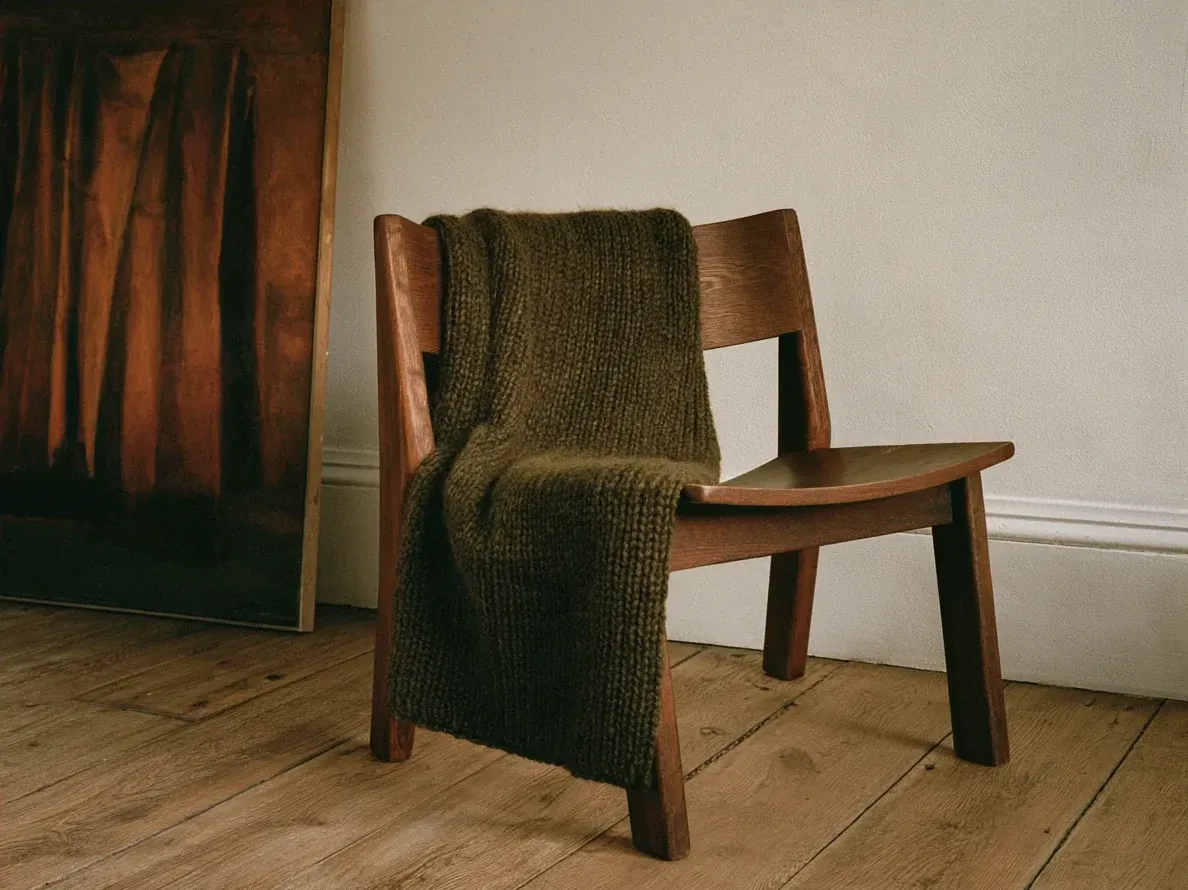
The i-cord bind off knits a small i-cord along the edge as you bind off. Each repeat joins the cord to one live stitch, so the edge ends in a rounded cord. It is used on edges that show, such as blankets, cardigan fronts and shawls.
How to work it
Work with the right side facing the whole time.
Cast on 3 stitches onto the left needle with the cable cast on or the knitted cast on. These stitches make the cord.
Knit 2.
Knit 2 together through the back loops (k2tog tbl). This joins the third cord stitch to the next stitch of the edge and binds off one stitch.
Slip the 3 stitches from the right needle back to the left needle purlwise, one at a time, in the same order.
Pull the yarn snug across the back of the work.
Repeat steps 2 to 5 until only the 3 cord stitches are left.
Pull the yarn snug on every repeat. If it is loose, a ladder of loose strands forms between the cord and the fabric.
How to finish the cord
On a straight edge: k2tog tbl, knit 1, slip the 2 stitches back to the left needle and k2tog tbl. Cut the yarn and pull it through the last stitch. Use a tapestry needle to pull the end into the cord.
On a closed edge, such as a neckline: cut the yarn and use a tapestry needle to graft the 3 stitches to the cast-on end of the cord. The cord then forms a closed ring.
When to use it
Use it on edges that show: blanket borders, cardigan fronts, armholes, shawl tops and bag openings. It is slow, because you knit 3 stitches for every stitch you bind off, and it uses more yarn than a standard bind off. On edges that do not show, a standard bind off is quicker.
The cord does not stop stocking stitch from curling. Garter stitch or rib along the edge does that.
Some patterns join the cord with ssk or a plain k2tog instead of k2tog tbl. The result is almost the same. Follow your pattern.
Common mistakes
Turning the work out of habit. The cord stops forming. Always knit from the right side.
An edge that pulls in. Knit more loosely, or use a needle one size larger.
Frequently asked questions
How many stitches do I cast on for an i-cord bind off?
Three is standard. Two stitches give a thinner cord and 4 a thicker one. Cast them onto the left needle just before you start.
Why is there a gap or ladder between my i-cord and the fabric?
The yarn carried across the back was too loose. Pull it snug every time you slip the stitches back.
Does an i-cord bind off stop curling edges?
No. It finishes the edge but does not stop stocking stitch from curling. Knit a border in garter stitch or rib if you want to prevent that.
Is the i-cord bind off stretchy?
It has a little stretch, but it is a fairly firm edge. Use a stretchy bind off on edges that need to stretch.
Co-founder and editor at Knyt. Knits every guide before it is published.
More about Julia